Let’s Get Physical
The better question is not “what should we post next?” It is: where do our people need to gather?
We have built the most connected communication infrastructure in human history, and we are dying of loneliness.
(In 2023, the U.S. Surgeon General declared loneliness a public health epidemic, warning that lacking connection can increase the risk of premature death to the same degree as smoking fifteen cigarettes a day.)
Here’s the question for us: what role do those of us who write, sing, film, talk, design, paint, sculpt, and animate play?
For the better part of a decade, and I certainly contributed to it ( … sigh …), the dominant theory of culture was this: go digital, go deep, go wide. Build your audience. Optimize for reach. Win the algorithm. More content means more exposure means more influence, right?
And for a while, it worked. Except that somewhere along the way, we confused reach with relationship. We built audiences we never actually met. We measured engagement in seconds, not in years. We called people followers, which is either honest or damning depending on your mood.
Is it any surprise that people are opting out. Not completely, of course. The screens aren’t going anywhere. Four in ten Americans report being online almost constantly. But underneath that usage data, an exciting and significant trend is happening. People are actively, deliberately seeking the thing that no platform can manufacture: presence.
Some evidence:
Book club events on Eventbrite grew by 31% in 2024 compared to the year before. Silent book clubs (a cool idea where strangers gather simply to read in the same room) more than doubled. These are not hobbyists finding each other online. These are people driving to a coffee shop on a Tuesday night because they need to be in a room with other human beings who care about the same things they care about. NBC News recounted one organizer’s interpretation of the growth. “What people want is to feel something deeply, and it slows us down in a time when everything is digital and everything is fast-paced.”
That is not true about books alone. That is true of culture generally.
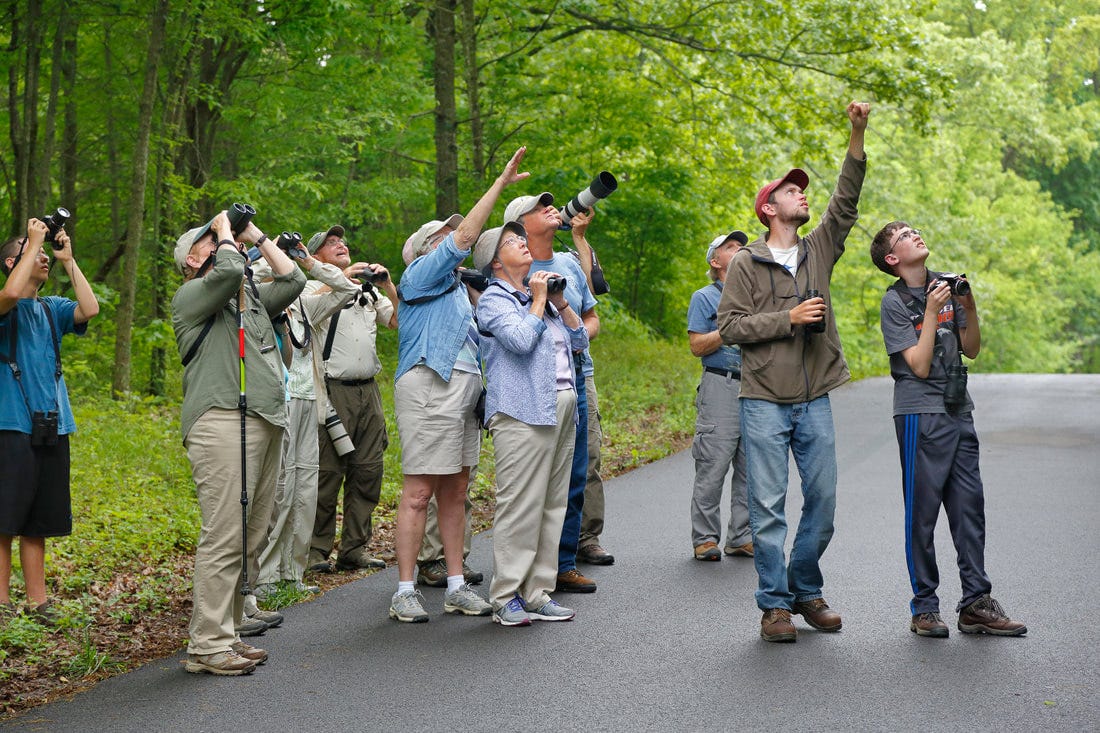
Live Nation reported that 151 million fans attended its events in 2024, an all-time high. Comedy clubs are louder. Birdwatching groups are growing. Pickleball courts are overrun. The top-line melody is the hunger for something tactile, something earned, something that requires you to actually show up. You cannot “thumbs up” your way into it. You cannot scroll past it. You have to be there.
Love him or loath him, Gary Vaynerchuk has been saying something about this that cuts through the noise. His argument, stripped to its core, is that we are moving from a world where content is king to one where connection takes the crown. Seems he sees it more than a marketing insight, and more of a civilizational correction.
Here is the truth for anyone who makes things for a living: if your entire model lives online, you are building on rented land. If the only place your audience knows you is through a screen, you have a depth problem. Attention is not loyalty. Followers are not community. A large number does not mean a real thing.
The creators and organizations who understand what is actually happening right now … those who grasp that this is not a content problem but a belonging problem … are the ones who will matter in the next decade. Those who understand digital as the invitation and presence as the destination.
Being in the room, with others, is the point.
So the better question is not “what should we post next?” It is: where do our people need to gather? What does it look like to turn an idea into a table, a tour, a club, a night, a moment that could not exist on a screen? What gets created in the friction between real people in a real room that no algorithm can replicate?
Eye contact. Laughter that lands in the body. Awkward silences that turn into actual conversations. The sense of being known by people who chose to show up.
Call me nostalgic. I don’t think that I am … or that I’m alone in this thinking. According to studies, social connection is a critical and under-appreciated contributor to individual and population health, community safety, resilience, and prosperity. But do we really need a study to tell us that … I think in our gut, we already know it.
The bottom line? The future is not less digital. But it is more physical. The challenge for you today: create spaces people want to be.